
 Peonies When to sow and plant
When to plant peonies
You plant a peony once and it stays for years. So it pays to get the timing, the spot and, above all, the depth right first time.
In short
The RHS plants bare-rooted peony divisions in late autumn and potted peonies in late spring. Cover the red buds with no more than 2.5 cm of soil, because deep planting reduces flowering. Choose full sun and leave about 1 m between plants.
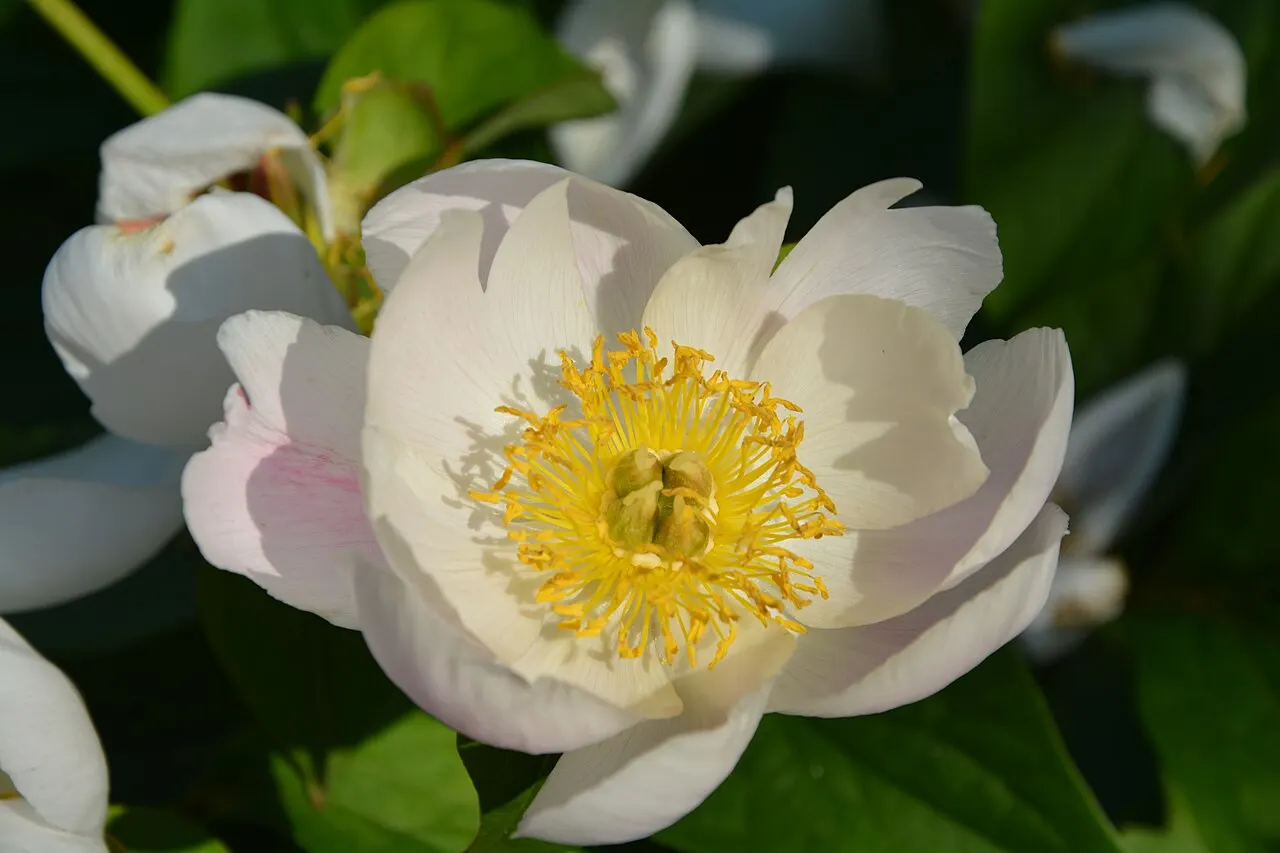

Peonies: what to do and when
Under cover and outdoors, for UK conditions. The weather differs from year to year and from north to south, so check your local conditions too.
When to plant herbaceous peonies
The RHS gives two planting times for herbaceous peonies, and they depend on how you buy the plant.
Bare-rooted divisions are best planted in late autumn. The RHS says the widest range is available from specialist nurseries, often as bare-rooted divisions in late autumn.
Plants in pots are best planted in late spring. Garden centres sell them in pots ready for planting from late spring to early summer, the RHS says.
When to plant tree peonies
Tree peonies follow a different calendar. The RHS says they are best planted in autumn, but winter or early spring planting is also suitable.
Avoid late spring and summer. The RHS says plants will not establish well in hot, dry conditions.
As with herbaceous peonies, the widest range comes from specialist nurseries, often as bare-rooted divisions in late autumn. A small selection is sold in pots from late spring to early summer.
Site and soil
The RHS plants herbaceous peonies in full sun and fertile soil improved by digging in garden compost. They grow well in a range of soils, including clay, as long as it does not get waterlogged. Each plant needs about a square metre of space without competition from other garden plants, so the RHS spaces them about 1 m apart.
Tree peonies take a sunny or lightly shaded position. The RHS prefers a sheltered spot, so strong winds do not damage the flowers and foliage. They are very hardy, but late frosts can damage the foliage and flower buds, so avoid frost pockets. They prefer neutral, humus-rich, well-drained soil, but tolerate slightly acid or slightly alkaline soil.
Depth: the rule that matters most
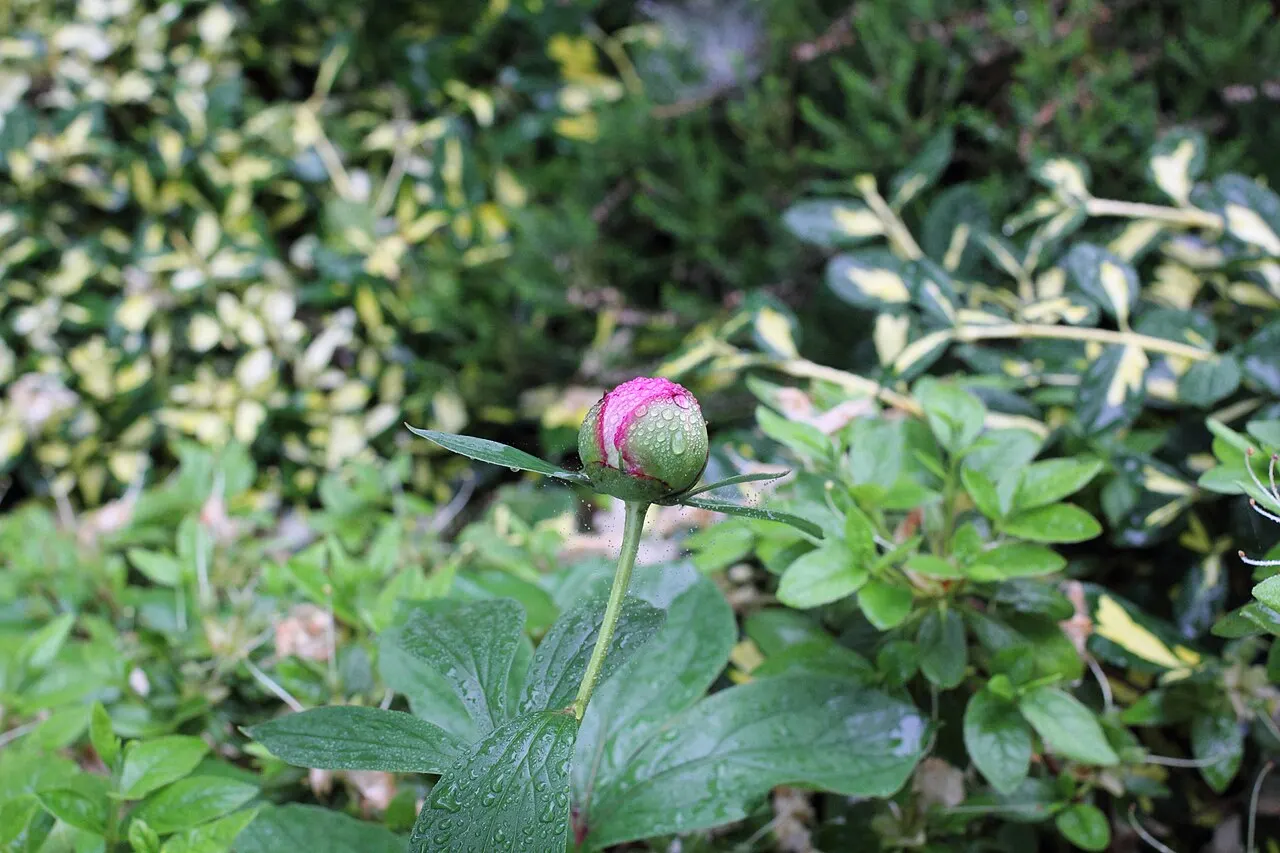

For herbaceous peonies, the RHS rule is short: make sure the bright red buds are covered with no more than 2.5 cm of soil, because deep planting reduces flowering. Dig the planting hole the same depth as the root ball or division and twice as wide.
Tree peonies are the opposite. The RHS sets the graft union about 15 cm below soil level. Deep planting encourages the grafted plant to form its own roots.
Dividing and moving peonies
The RHS says peonies are very long lived and steadily make large clumps. It leaves a clump alone until flowering starts to decline, then divides it in autumn.
Cut the clump so each section has at least three dormant growth buds and some roots. Replant the sections with the buds 2.5 cm below soil level. The RHS says divisions should flower two years after dividing.
To move a peony that flowers poorly, the RHS moves it in autumn to a better position, replants it shallower, or both. A moved plant can take a year or two to start flowering again.
Aftercare: water, mulch and winter
Water in to settle the soil, then keep watering regularly through the first summer, especially in dry weather. The RHS says this for both herbaceous and tree peonies. Established tree peonies are deep rooted and, after the first year, should not need routine watering. For herbaceous peonies, the RHS also warns that prolonged drought in spring can cause poor flower bud development, or buds that fail to open. For tree peonies, it says prolonged drought may affect flowering the following season.
Mulch from late autumn to late winter (November to February), in a layer at least 5 cm thick. On herbaceous peonies, avoid covering the centre of the plant, as this could damage the buds. On tree peonies, do not pile mulch against the stems, as they may rot.
When herbaceous peony foliage dies back in autumn, the RHS cuts it at ground level to reduce the risk of infection. Do not worry about ants on the flower buds: the RHS says they do not cause damage.
Cheat sheet: planting peonies
| What | How |
|---|---|
| When (herbaceous) | Bare-rooted divisions in late autumn, plants in pots in late spring (RHS) |
| When (tree peonies) | Best in autumn, winter or early spring also suitable. Not in late spring or summer (RHS) |
| Bud depth (herbaceous) | No more than 2.5 cm of soil over the buds |
| Hole | Same depth as the root ball or division, twice as wide |
| Site | Full sun, fertile soil improved with garden compost |
| Spacing | About 1 m apart, about a square metre each without competition |
| Dividing | In autumn, at least three dormant buds and some roots on each piece |
| First flowers after dividing | Usually two years later |
| Tree peony graft union | About 15 cm below soil level; up to four years to flower |
| Watering | Regularly through the first summer, especially in dry weather |
How to do it
- Choose a spot in full sun. The RHS says deep planting and a shady position may result in a lack of flowers.
- Improve the soil by digging in garden compost. Peonies grow well in a range of soils, including clay, as long as it does not get waterlogged.
- Dig a hole the same depth as the root ball or division and twice as wide. Leave about 1 m between plants.
- Plant a herbaceous peony so the bright red buds are covered with no more than 2.5 cm of soil.
- Water in to settle the soil, then keep watering regularly through the first summer, especially in dry weather.
- Plant a tree peony deep, with the graft union about 15 cm below soil level. The RHS says this encourages the plant to form its own roots.
- Mulch from late autumn to late winter, at least 5 cm thick, but do not cover the centre of a herbaceous peony or pile mulch against the stems of a tree peony.
- When the foliage of herbaceous peonies dies back in autumn, cut it off at ground level to reduce the risk of infection.
Common questions
When is the best time to plant peonies?
For herbaceous peonies, the RHS plants bare-rooted divisions in late autumn and potted plants in late spring. Tree peonies are best planted in autumn, though winter or early spring also suits them.
How deep should I plant peonies?
Herbaceous peonies go in shallow: the RHS covers the bright red buds with no more than 2.5 cm of soil, as deep planting reduces flowering. Tree peonies go in deep, with the graft union about 15 cm below soil level.
Can I plant peonies in spring?
Herbaceous peonies sold in pots, yes: the RHS says they are best planted in late spring. Tree peonies can go in early spring, but the RHS says avoid late spring and summer, because they will not establish well in hot, dry conditions.
Why is my peony not flowering?
The RHS names deep planting and a shady position, and says prolonged drought in spring can cause poor flower buds. A recently moved peony can take a year or two to flower again.
How do I divide a peony?
In autumn, the RHS cuts the clump into sections, each with at least three dormant growth buds and some roots. Replant with the buds 2.5 cm below soil level. Divisions should flower two years later.
How long until a new peony flowers?
Divided herbaceous peonies should flower two years after dividing, the RHS says. Tree peonies can take up to four years to settle in and flower, even if bought in bloom.
Sources
We wrote this page using the sources below.
- How to grow herbaceous and intersectional peonies, Royal Horticultural Society (RHS)
- How to grow tree peonies, Royal Horticultural Society (RHS)