
 Tomatoes When to sow and plant
When to sow tomato seeds
Sow too early and you get tall, hungry seedlings with nowhere to go. Sow at the right time and they are ready just as the weather warms up.
In short
Sow tomato seeds indoors from late February to mid March if the plants will grow in a greenhouse, and from late March to early April if they will go outside. Seeds need about 18 °C to germinate. Plants are ready to plant about a month after pricking out.

Tomatoes: what to do and when
Under cover and outdoors, for UK conditions. The weather differs from year to year and from north to south, so check your local conditions too.
Count back from planting day
The right sowing date depends on where your tomatoes will spend the summer. The RHS gives two windows. Sow from late February to mid March if the plants will grow in a greenhouse, and from late March to early April if they will grow outdoors.
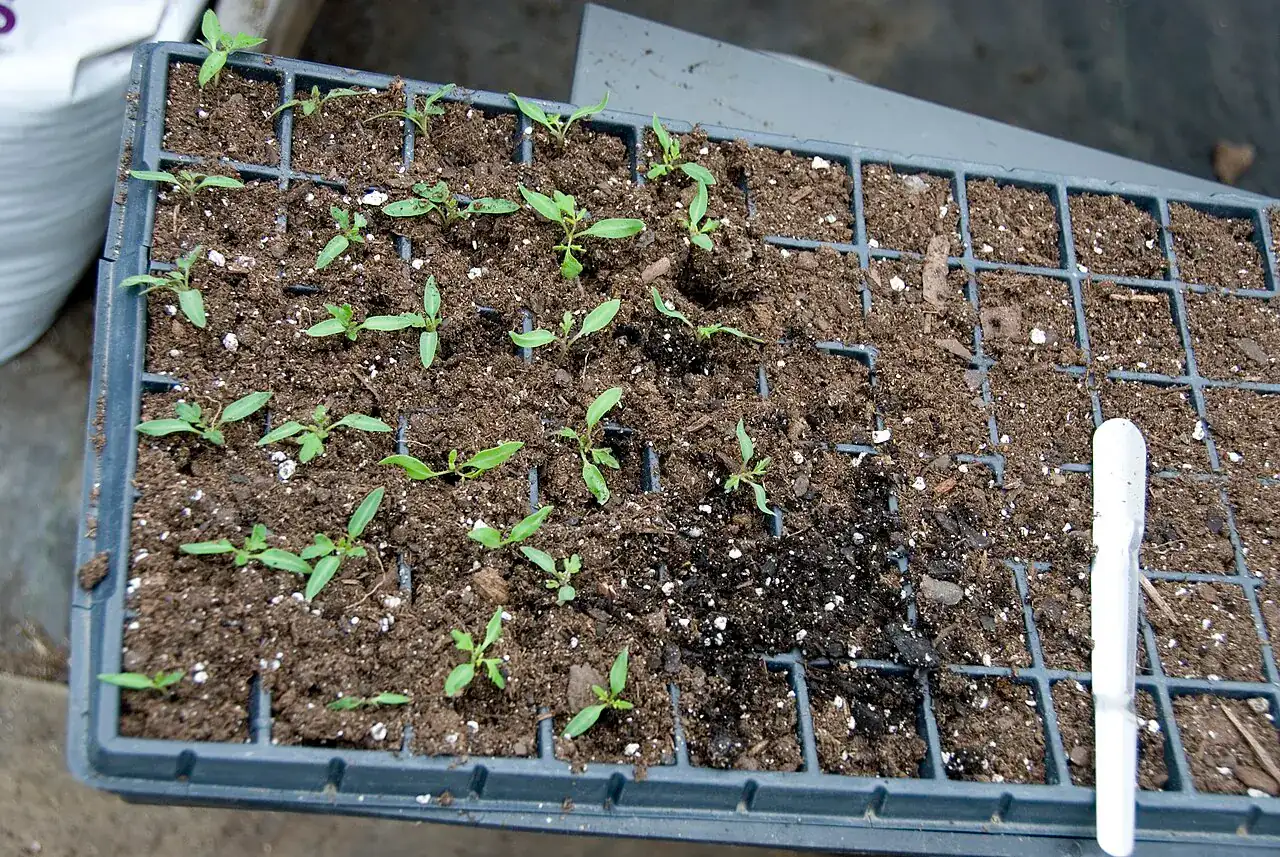
Why the gap? A tomato plant raised indoors is ready to plant about a month after pricking out. A greenhouse lets you plant earlier, so you can sow earlier. Outdoor plants have to wait until the weather is warm enough, and a seedling sown too early just sits on the windowsill, growing tall and weak.
Other UK guides give slightly different dates. BBC Gardeners' World says you can sow indoors or for a greenhouse from early February, and for outdoor plants from March to early April. Garden Organic suggests March or April indoors. If you have a heated propagator and a bright spot, the earlier dates work. If you only have a windowsill, March is the safer choice.
Warmth: what tomato seeds need to germinate
Tomato seeds need warmth. The RHS says they germinate at about 18 °C. A heated propagator is the easiest way to keep that temperature, but a warm windowsill works too if you cover the pot with a clear plastic bag. BBC Gardeners' World adds that a heated propagator speeds things up but is not essential.
Seedlings usually appear within a fortnight, according to the RHS. Garden Organic gives a time of 8 to 11 days. As soon as you see them, take off the cover and give them as much light as possible.
Sow thinly. Garden Organic recommends a depth of just 0.1 cm, which is little more than a dusting of compost. BBC Gardeners' World suggests scattering the seeds evenly, covering them with a thin layer of vermiculite and keeping the pot moist under a plastic bag or clingfilm.
Light and leggy seedlings
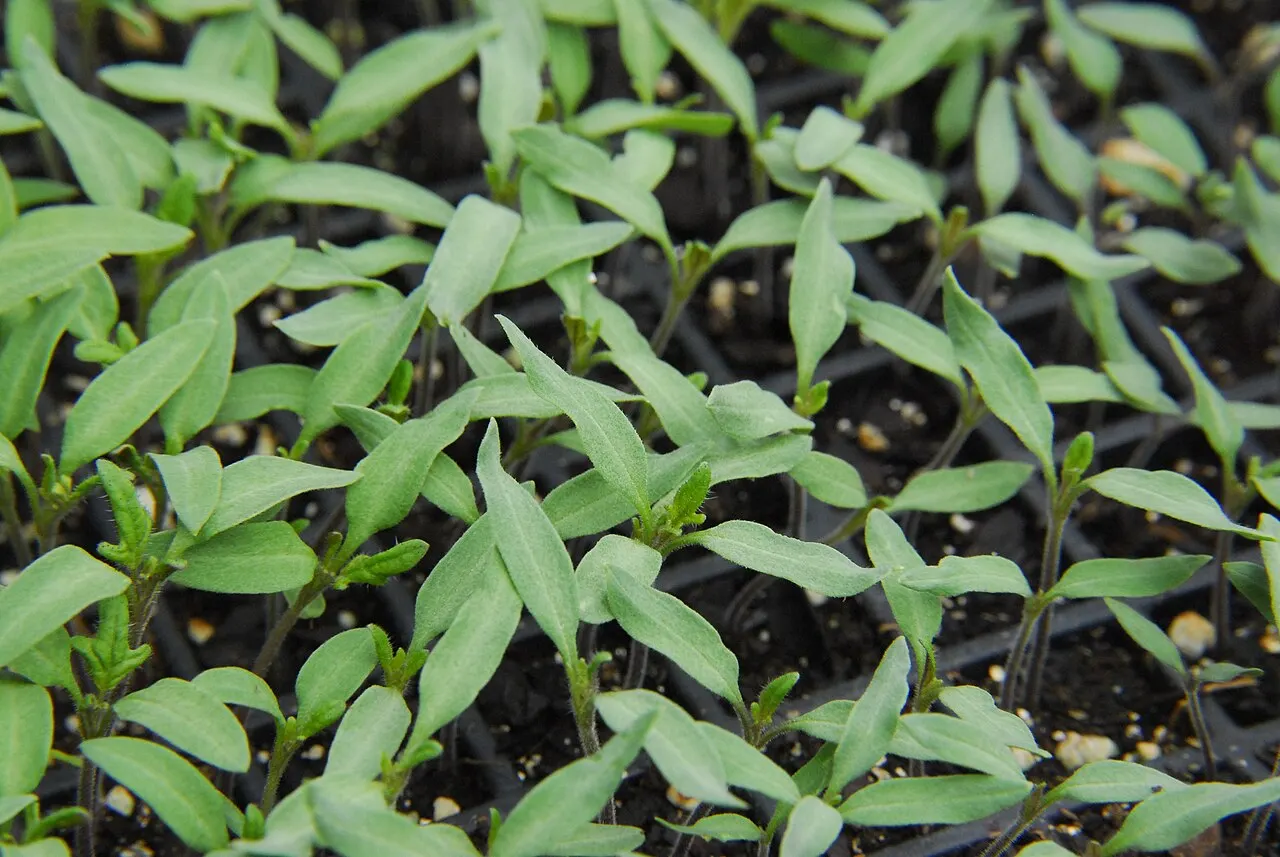

Early in the year, light is often the problem, not warmth. On a windowsill, seedlings lean towards the glass. BBC Gardeners' World advises turning the pot regularly so the plants grow straight and do not become distorted.
After germination the RHS recommends keeping seedlings at a minimum of 16 °C, in a bright spot, and watering them regularly. That is one more reason not to sow too early: in February the days are short, so a windowsill gives much less light than it does in March.
Pricking out and potting on
When the seedlings have a couple of true leaves, move each one into its own pot or module, the RHS says. Hold them by a leaf, never by the stem. A stem crushed between your fingers will not recover, while a damaged leaf will.
BBC Gardeners' World suggests moving seedlings into 8 cm pots once they have their first pair of leaves, and planting them deeply. Another of its guides waits until seedlings are about 10 cm tall before potting them into 7.5 cm pots. Either way, bury the stem deeper than it was before. When the roots fill the pot, move the plant into a slightly bigger one.
Planting deeply works later too. The RHS advises planting tomatoes so that the first set of leaves sits just above the soil, because the buried stem grows extra roots.
Frost and the date for planting out
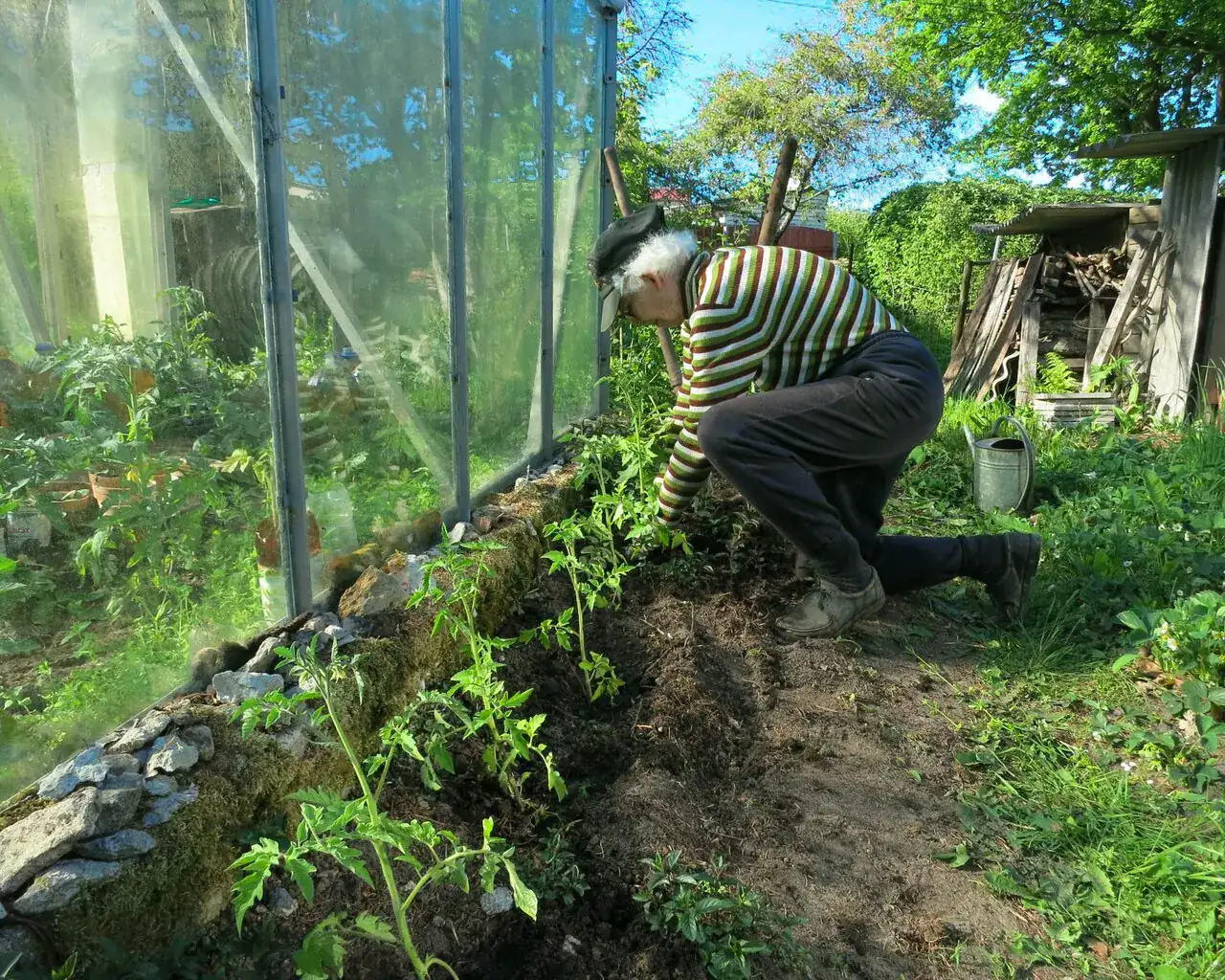

Tomatoes are tender and need protection from frost. BBC Gardeners' World says to plant them outside only once the danger of frost has passed, usually some time in May, and to harden them off gradually over a couple of weeks first. The RHS is stricter: plant out in early summer, once temperatures are reliably above 16 °C. Garden Organic plants outdoors from late April to early June, when the first flowers open, after hardening off.
When is the last frost where you live? The Met Office explains that in southern and coastal areas the average last air frost usually comes before the end of April. In northern areas and on higher ground it often comes in May, and in a few places even in June. Valleys and rural gardens get frost more often than towns.
The Met Office also notes that in May, ground frost is more common than air frost. Grass and soil can drop below 0 °C while the air a metre up stays just above freezing, and that is enough to damage tender plants. If a clear, calm night is forecast in May, keep young tomatoes indoors or covered.
Greenhouse or outdoors?
In a greenhouse you can sow and plant earlier and pick for longer. BBC Gardeners' World says greenhouse growing gives a longer season and usually more tomatoes. The RHS notes that greenhouse plants usually crop earlier and continue well into autumn, while ripening outdoors starts from mid summer.
Outdoors, choose a warm, sunny, sheltered spot. Garden Organic gives a spacing of 30 to 45 cm for outdoor plants. The RHS suggests 45 to 60 cm, depending on how big the variety grows, or one plant in a 30 to 45 cm pot.
Once your plants are in, the next jobs are supports, side shoots, watering and feeding. We cover them in How to grow tomatoes.
When will the first tomatoes be ready?
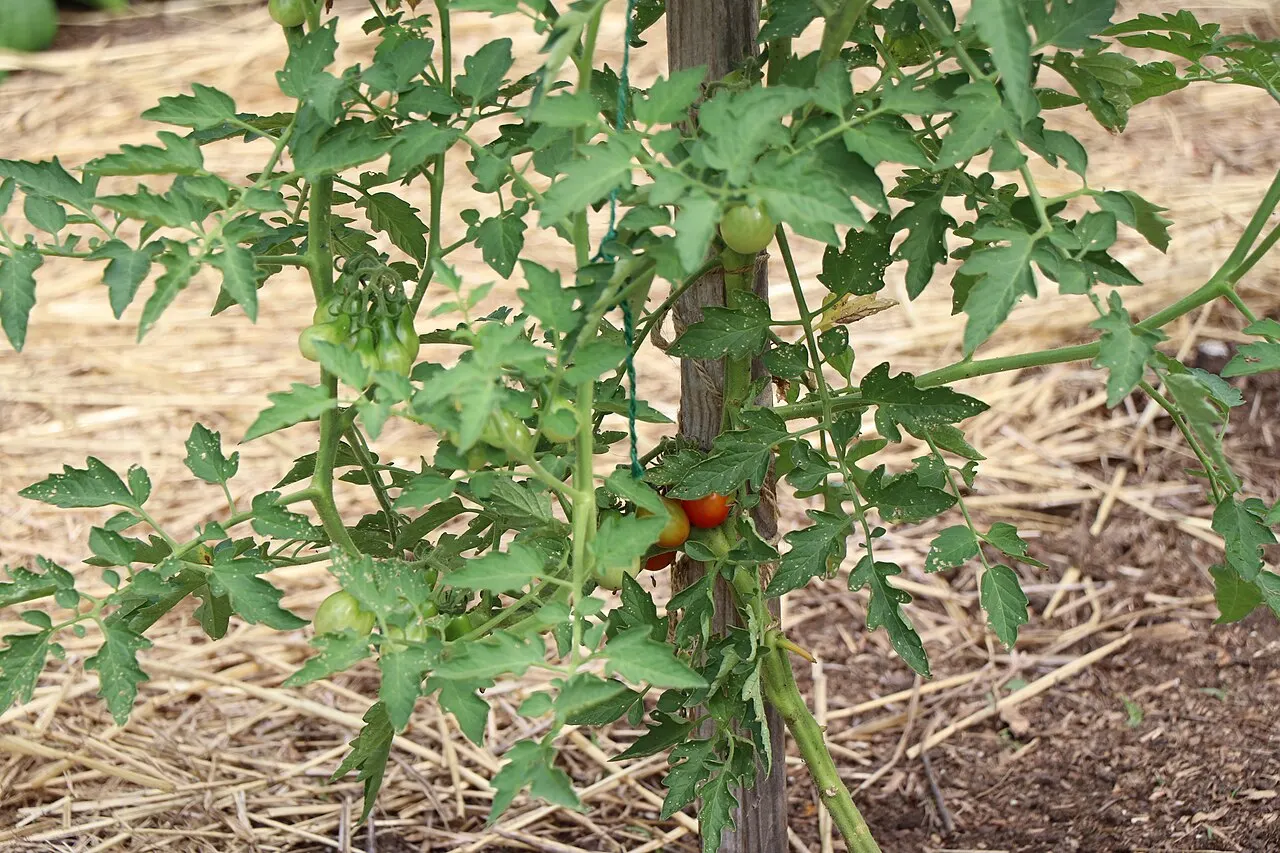

Garden Organic gives an average growing period of 12 to 20 weeks and a harvest from July to October. Seeds sown in March and planted out in May should give the first ripe fruit some time in summer, earlier under glass than outside.
At the end of the season the RHS suggests lifting outdoor plants that still have green fruit and laying them on straw under cloches, or picking the fruit and ripening it somewhere warm and dark. A drawer with a banana also works. Garden Organic adds that green tomatoes make good chutney.
Cheat sheet: sowing tomato seeds
| Job | When or how |
|---|---|
| Sow for a greenhouse crop | Late February to mid March |
| Sow for an outdoor crop | Late March to early April |
| Germination temperature | About 18 °C, in a heated propagator or on a warm windowsill under a clear bag |
| Time to germinate | Usually within a fortnight (Garden Organic: 8 to 11 days) |
| Sowing depth | 0.1 cm, a very thin covering |
| Pricking out | When seedlings have a couple of true leaves, into individual pots or modules |
| Growing on | At least 16 °C, as much light as possible |
| Planting out | About a month after pricking out, once frost has passed |
How to do it
- Fill a pot with seed compost, leaving a couple of centimetres below the rim, and scatter the seeds well apart.
- Cover them very thinly with compost or vermiculite, water, and put the pot in a clear plastic bag or a propagator.
- Keep the pot at about 18 °C. Take the cover off as soon as the seedlings appear, usually within two weeks.
- Give the seedlings as much light as you can and turn the pot on a windowsill so they grow straight.
- When they have a couple of true leaves, move each seedling into its own pot, holding it by a leaf, not the stem. Plant it deeply.
- Keep the young plants at 16 °C or more. Harden them off over a couple of weeks before they go outside.
Common questions
Is February too early to sow tomatoes?
Not if they will grow in a greenhouse. The RHS gives late February to mid March for a greenhouse crop, and BBC Gardeners' World says from early February. For plants that will go outdoors, the RHS suggests late March to early April.
Is April too late to sow tomatoes?
No. The RHS window for outdoor tomatoes runs to early April, and Garden Organic suggests March or April. Late sown plants will simply crop later.
How long do tomato seeds take to germinate?
Usually within two weeks at about 18 °C, according to the RHS. Garden Organic gives 8 to 11 days.
When can I plant tomatoes outside in the UK?
After the last frost, which BBC Gardeners' World says is usually some time in May. The RHS waits until temperatures are reliably above 16 °C. In the north and on higher ground frost can come later, so check your local forecast.
Do tomato seeds need light to germinate?
Our sources do not say they need light to germinate, only warmth of about 18 °C. As soon as the seedlings appear, they need as much light as possible.
Sources
We wrote this page using the sources below.
- How to grow tomatoes, Royal Horticultural Society (RHS)
- How to sow tomato seeds, BBC Gardeners' World Magazine, 2019
- How to grow tomatoes, BBC Gardeners' World Magazine, 2025
- Tomatoes (growing guide), Garden Organic
- Why frost can still occur in late spring, Met Office, 2026