
 Houseplants Growing and care
Amaryllis care
One big bulb, a few weeks, and a stem of huge flowers. Look after the leaves in summer and give it a cool rest, and the RHS says it can bloom year after year.
In short
Plant the bulb in a pot a little larger than itself, two-thirds above the compost. Keep it in a well-lit spot at about 21 °C and water sparingly until leaves grow. Flowers follow in six to eight weeks, the RHS says. Then keep the leaves growing and rest it.

Houseplants at a glance
Hippeastrum · Amaryllidaceae
- Position
- Bright, filtered light
- Soil
- Peat-free John Innes No.2 or peat-free multipurpose compost
- Watering
- Sparingly until leaves develop, then regularly
- Height
- 25–90 cm
Houseplants: what to do and when
Under cover and outdoors, for UK conditions. The weather differs from year to year and from north to south, so check your local conditions too.
Amaryllis or hippeastrum?
The plant sold as amaryllis at Christmas is botanically Hippeastrum. A University of Reading blog explains the muddle. In 1753 Linnaeus put plants from South Africa and South America in the same genus, *Amaryllis*. The American species were later separated into *Hippeastrum*. In 1987 the International Botanical Congress settled that the name *Amaryllis* belongs to the South African *Amaryllis belladonna*.
So the true amaryllis comes from South Africa, while hippeastrums come from South America, particularly Brazil, the Reading blog says. It counts about 90 species and 600 hybrids. The common name amaryllis has stuck to hippeastrum anyway.
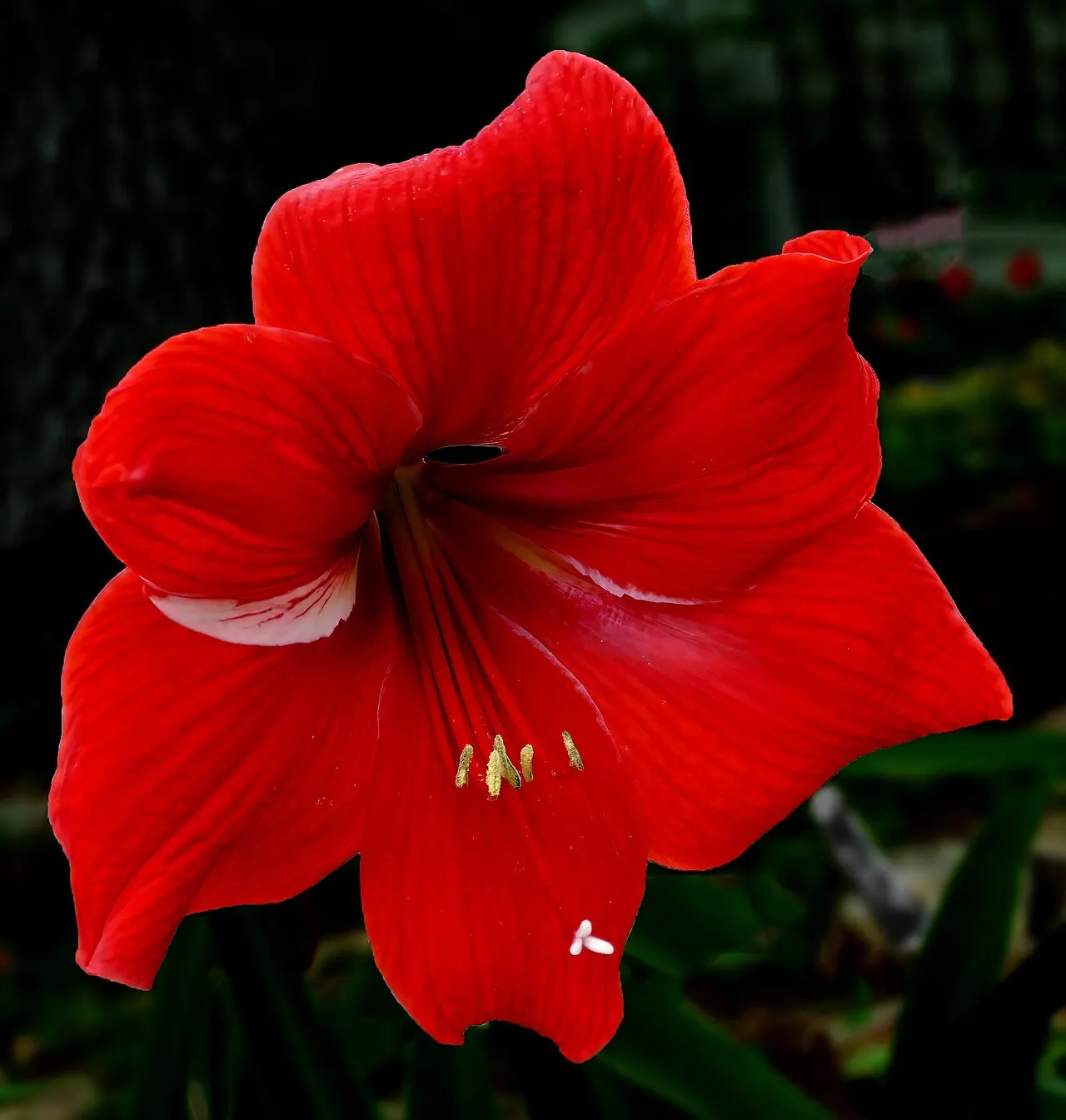
The RHS describes hippeastrums as popular Christmas gifts that can flower year after year. They grow 25–90 cm tall and flower from winter to spring. They are tender, so in the UK they are grown in pots indoors.
Planting the bulb
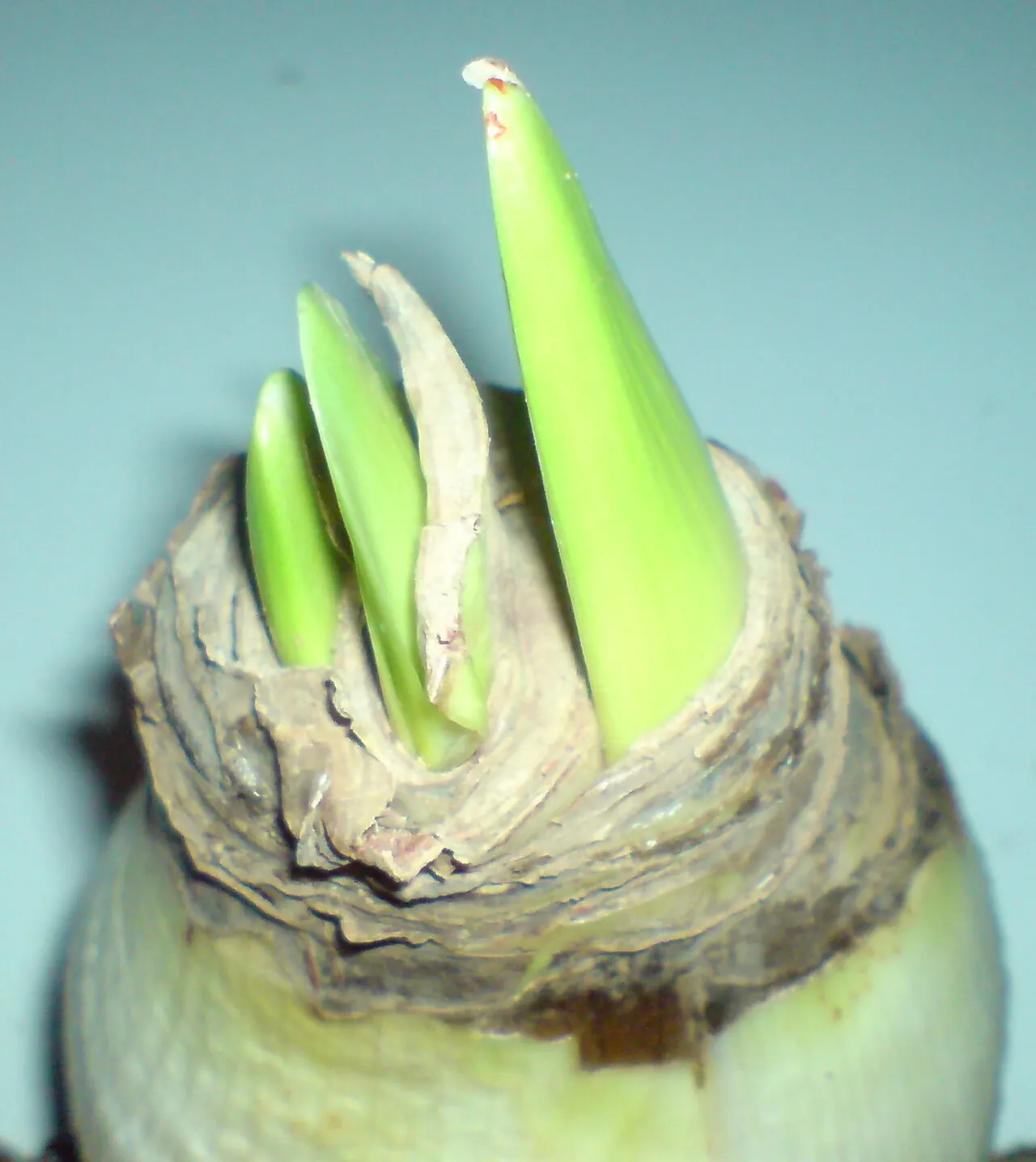

When. The RHS plants from October to January.
Pot and compost. Use a pot a little larger than the bulb, the RHS says, filled with peat-free John Innes No.2 or peat-free multipurpose compost. For the species *Hippeastrum papilio*, the RHS plant page suggests a 15 cm pot for large bulbs and a 10 cm pot for smaller ones.
Depth. The RHS growing guide leaves two-thirds of the bulb above the compost. Its plant page for 'Red Lion' says to leave the neck and shoulders above the surface. Either way, most of the bulb stays out of the compost.
First watering. Water sparingly until new leaves develop, the RHS says. Its *H. papilio* page waters the bulb in well after potting, then starts regular watering once leaves appear, as that shows the roots are active.
How long until it flowers
The RHS growing guide says flowers appear about six to eight weeks after planting.
Here the RHS pages differ. Its page on bulbs for Christmas flowering says hippeastrums take about 10 weeks from planting to flowering, and advises planting in October for flowers at Christmas.
That page also gives a general method for forced bulbs, hippeastrum included. Keep the pots somewhere dark and cool, ideally 9 °C, while the roots grow. Bring them in when the shoots are 4–5 cm long, first to a cool room away from bright light, then to a warmer spot near a window. Keep them out of draughts and away from radiators.
Light, temperature and watering
Light. The RHS gives hippeastrum bright, filtered light. Turn the pot regularly so the flower stalk does not lean towards the window.
Warmth. Grow it at about 21 °C to get it going. Once it is in flower, move it somewhere cooler, at 15–18 °C, to make the flowers last longer.
Watering. Water sparingly until new leaves develop, then regularly. Do not let the compost dry out, but do not let water collect in the saucer either, the RHS says.
Support. Stake large-flowered varieties, the RHS advises.
Humidity. The RHS Christmas bulbs page stands forced bulbs on trays of moist gravel, with the water level below the base of the pot.
After flowering
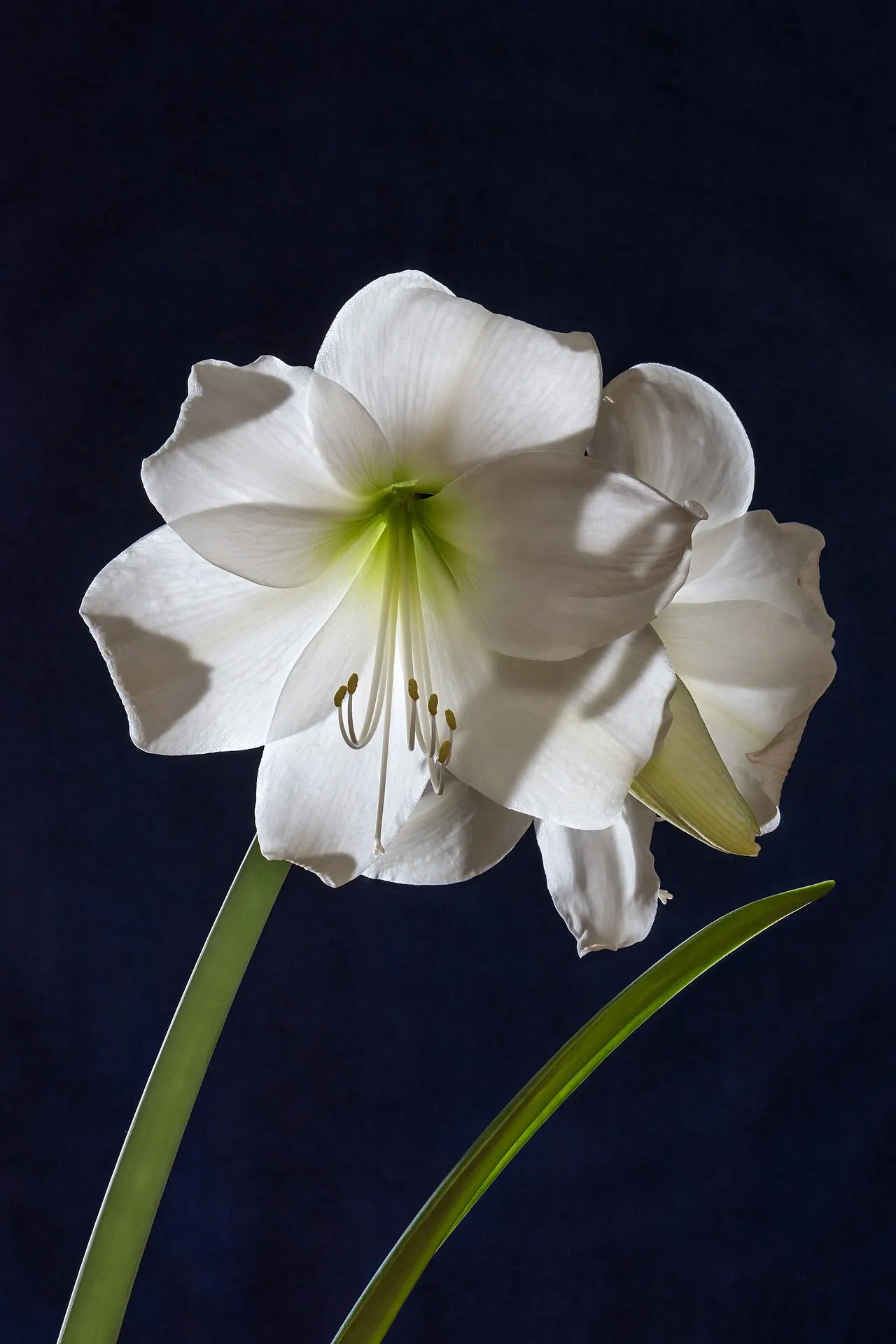

Do not throw the bulb away. The RHS gives two ways to keep it going.
Method 1: keep it growing. Cut the spent flower spikes to the base. Keep the leaves growing, water carefully and give a balanced liquid feed weekly. In summer, put the pot outside or in a greenhouse, shaded from scorching sun, and water regularly.
Feeding: the RHS pages differ. The growing guide feeds weekly. The plant page for 'Red Lion' feeds with a dilute balanced liquid fertiliser every two weeks once growth starts.
The plants can stay in active growth for a few months before resting, the RHS Christmas bulbs page says.
The rest period: making it flower again
The RHS offers two ways to rest the bulb from late September.
Cool rest. Move the plant to a well-lit spot and keep it cool, at about 13 °C, for eight to ten weeks. Stop feeding and water less, so it becomes semi-dormant. Then cut the old leaves back to 10 cm from the neck of the bulb, replace the top 2.5–5 cm of compost and start it off again like a new bulb.
Dry rest. Stop watering and let the plant dry out gradually. It may die back. Cut off spent flower spikes and yellowed leaves. Keep the pot somewhere cool, such as a greenhouse or garage, for one to two months. It does not need light. To restart, bring it indoors into the light and start watering and feeding again.
Why it may not flower. The RHS lists drying the plant off too early, growing it in too much shade, and under-watering the previous summer. Fungal diseases and bulb pests can also be to blame.
Repotting and new plants
Repotting. The RHS growing guide repots every two or three years, from January to March after flowering. The 'Red Lion' plant page says every three to five years in autumn. The two RHS pages differ.
Offsets. Small bulbs grow beside the main one. The RHS separates offsets that have their own roots when repotting and pots them on their own in free-draining, peat-free compost at 21 °C. Do not rest them. They make a flowering bulb identical to the parent in three to four years.
Seed. Seedlings can take up to six years to flower and usually differ from the parent, the RHS says. Sow fresh seed in spring at 21 °C and keep the seedlings growing without a rest.
Varieties. The RHS suggests *H. papilio*, white with deep red streaks, 'Belinda' in deep crimson, 'Bestseller' in cerise pink, 'Red Lion' in strong red, 'Star of Holland' in red with white markings and 'Lady Jane', a semi-double salmon pink.
Pests and problems
The RHS names bulb scale mite and large narcissus bulb fly as bulb pests, along with fungal diseases. If you put the plant outdoors in summer, watch for slugs and snails.
The RHS growing guide calls hippeastrum tender. Its plant pages rate 'Red Lion' and *H. papilio* H2: they tolerate low temperatures but do not survive being frozen, with a minimum of about 1 to 5 °C.
Is amaryllis poisonous?
Yes, if eaten. The RHS lists hippeastrum in its category C of potentially harmful plants: harmful if eaten. Its plant pages say it is harmful to dogs and cats if eaten and advise wearing gloves when handling it.
A University of Reading Herbarium blog says members of the amaryllis family produce highly toxic compounds, especially in the bulbs.
What to do. The RHS says serious poisoning by plants is very uncommon in the UK, and children are most at risk. If you think a child or adult has eaten part of a doubtful plant, it advises seeking medical advice immediately at a hospital A&E department, taking a sample of the plant, and not trying to make the person sick. If you think an animal has eaten it, seek veterinary advice.
An amaryllis year, from the RHS growing guide
| Stage | What to do |
|---|---|
| Planting, October to January | Pot a little larger than the bulb, two-thirds of the bulb above the compost, well-lit spot at 21 °C |
| Before leaves appear | Water sparingly |
| In flower, six to eight weeks after planting | Move to a cooler room at 15–18 °C to make the flowers last |
| After flowering | Cut spent flower spikes to the base, keep the leaves growing, feed weekly |
| Summer | Outside or in a greenhouse, shaded from scorching sun, watered regularly |
| Late September | Rest the plant: either cool at about 13 °C for eight to ten weeks, or dry in a cool place for one to two months |
| Restart | Back into light and warmth, water and feed again |
How to do it
- Choose a pot a little larger than the bulb. Fill it with peat-free John Innes No.2 or peat-free multipurpose compost.
- Plant the bulb so that two-thirds of it sits above the compost surface.
- Stand the pot in a well-lit spot at about 21 °C.
- Water sparingly until new leaves develop, then water regularly. Do not let the compost dry out or water sit in the saucer.
- Turn the pot regularly so the stem grows straight. Stake large-flowered varieties.
- When it flowers, move it somewhere cooler, at 15–18 °C, so the flowers last longer.
- After flowering, cut the spent flower spike to the base and keep the leaves growing.
Common questions
How do I look after an amaryllis?
Give it bright, filtered light at about 21 °C, water sparingly until leaves grow and then regularly. Move it to 15–18 °C while it flowers. After flowering, keep the leaves growing and feed it, then rest it from late September, the RHS says.
How deep should I plant an amaryllis bulb?
The RHS growing guide leaves two-thirds of the bulb above the compost. Its 'Red Lion' plant page says to keep the neck and shoulders above the surface.
When should I plant amaryllis for Christmas?
The RHS says to plant in October for Christmas flowers. Its growing guide says flowers appear six to eight weeks after planting, while its Christmas bulbs page says about 10 weeks.
What do I do with an amaryllis after it flowers?
Cut the spent flower spike to the base but keep the leaves. Water and feed it, put it outside or in a greenhouse in summer, then rest it from late September, the RHS says.
How do I get my amaryllis to flower again?
Rest it from late September. The RHS either keeps it in light at about 13 °C for eight to ten weeks with less water and no feed, or dries it off in a cool place for one to two months. Then restart it in light and warmth.
Why is my amaryllis not flowering?
The RHS lists drying it off too early, too much shade, and under-watering the previous summer. Fungal diseases and bulb pests can also stop it.
Is amaryllis poisonous to cats and dogs?
Yes. The RHS says hippeastrum is harmful to dogs and cats if eaten. If you think a pet has eaten it, seek veterinary advice.
Sources
We wrote this page using the sources below.
- Hippeastrum, Royal Horticultural Society (RHS)
- Bulbs for Christmas flowering, Royal Horticultural Society (RHS)
- Hippeastrum (Galaxy Group) 'Red Lion', Royal Horticultural Society (RHS)
- Hippeastrum papilio, Royal Horticultural Society (RHS)
- Potentially harmful garden plants, Royal Horticultural Society (RHS)
- 2014 Advent Botany, Day 18: Amaryllis (Hippeastrum spp.), University of Reading, Culham Research Group, 2014
- AdventBotany 2018, Day 12: the story of Amaryllis, University of Reading Herbarium, 2018