
 Garden jobs Growing and care
Mulching
A blanket of compost, bark or leaf mould does three jobs at once: it holds in water, keeps weeds down and feeds the soil. Winter is a good time to get it on.
In short
Spread a layer of organic matter, such as garden compost, leaf mould or composted bark, over weeded, moist soil that is not frozen. The RHS makes it at least 5 cm thick, ideally 7.5 cm. Keep it away from woody stems. Late autumn to early spring suits most gardens.

Garden jobs: what to do and when
Under cover and outdoors, for UK conditions. The weather differs from year to year and from north to south, so check your local conditions too.
What mulch is and what it does
The RHS defines mulch as a layer of material, at least 5 cm thick, spread on the soil surface. It can also cover the compost in a container.
The RHS list of benefits is long. Mulch:
- helps the soil hold moisture, so you water less - suppresses weeds - adds organic matter and nutrients - warms the soil in spring - protects roots from extreme heat and cold - encourages beneficial soil organisms - keeps edible crops off the soil - gives beds a neat finish
Over time it does more. The RHS says worms and other soil life gradually take the mulch down. Regular mulching improves drainage on clay and helps fast-draining sandy soil to hold water.
Garden Organic put a number on the weeding. In its 2020 trial, mulches reduced the time needed for weeding by 75%.
When to mulch: the sources differ
This is where the advice varies most, so here is each source in turn.
RHS, mulches page. Its definition gives late autumn to late winter, November to February. The same page then says mulches are best applied from mid- to late spring, when annual weeds have not yet germinated and herbaceous plants are dormant, and in autumn, as plants are dying back. New plantings can be mulched at any time of year.
RHS, step-by-step guide. Mulch once a year in late winter or early spring, before weed seeds start to germinate and while the soil is still damp.
Garden Organic. Mulches are best applied in early spring, as the soil is starting to warm up. It calls late February or early March the perfect time. It also warns against going too early: mulch laid on cold ground can trap the cold in the soil and slow growth. For no-dig beds, Garden Organic tops up in autumn, when crops are cleared, or in spring where winter crops have been growing.
What they agree on. Soil condition matters more than the calendar. Lay mulch on moist soil, after weeding, and never on frozen ground, the RHS says. Wait if the soil is very wet and squelchy. Get it down before the weeds germinate.
None of the sources gives separate dates for the south of England and for Scotland. Garden Organic says it pays to be mindful of your local conditions. In a cold garden, that points to waiting for the soil to begin warming.
Organic mulches: what to use

Biodegradable mulches break down, release nutrients and improve the soil structure, the RHS says. They need topping up once they have rotted away. Its list includes:
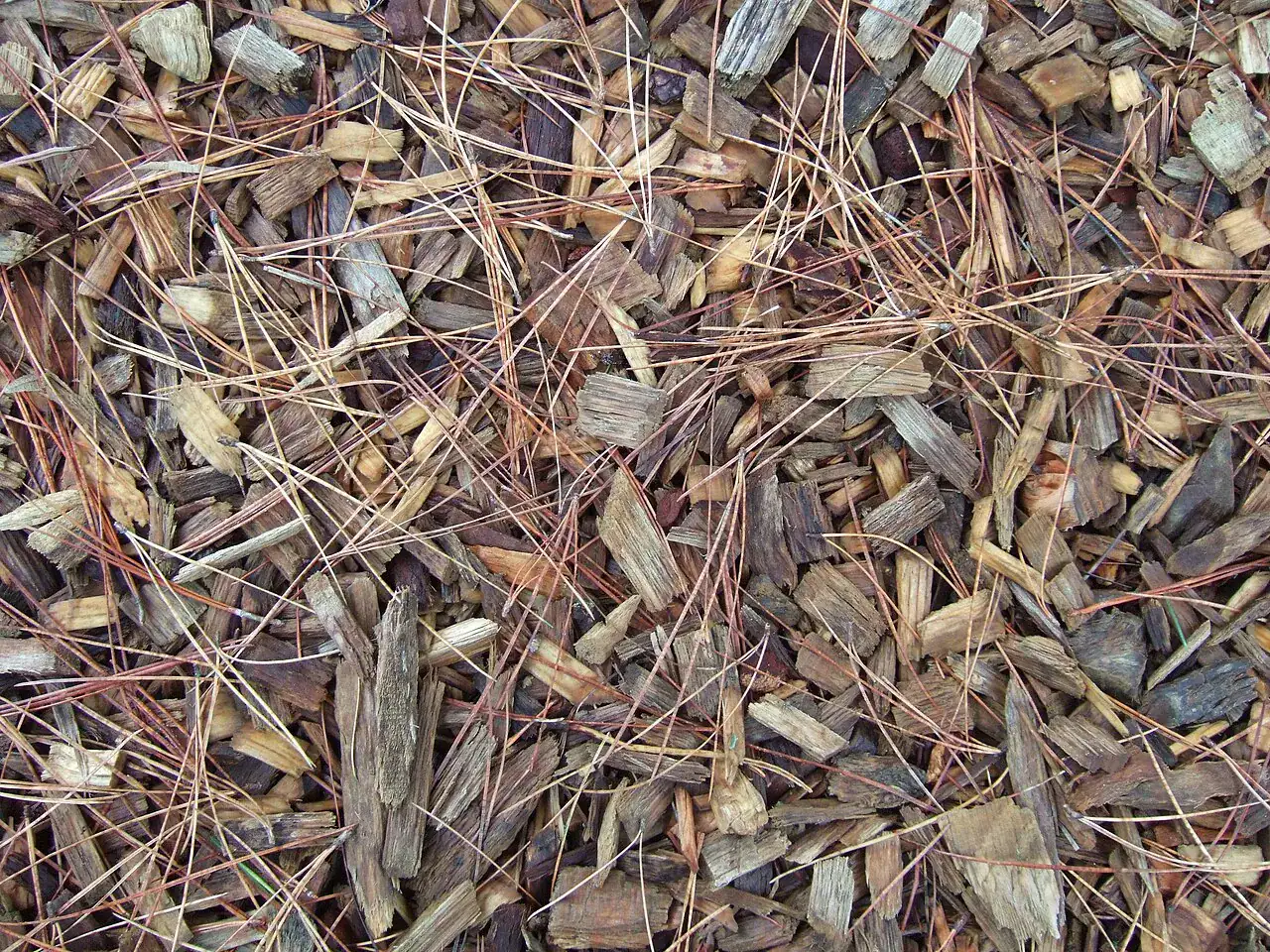
- garden compost - leaf mould - well-rotted manure - wood chippings - processed conifer bark - straw, for strawberries - seaweed - spent hops
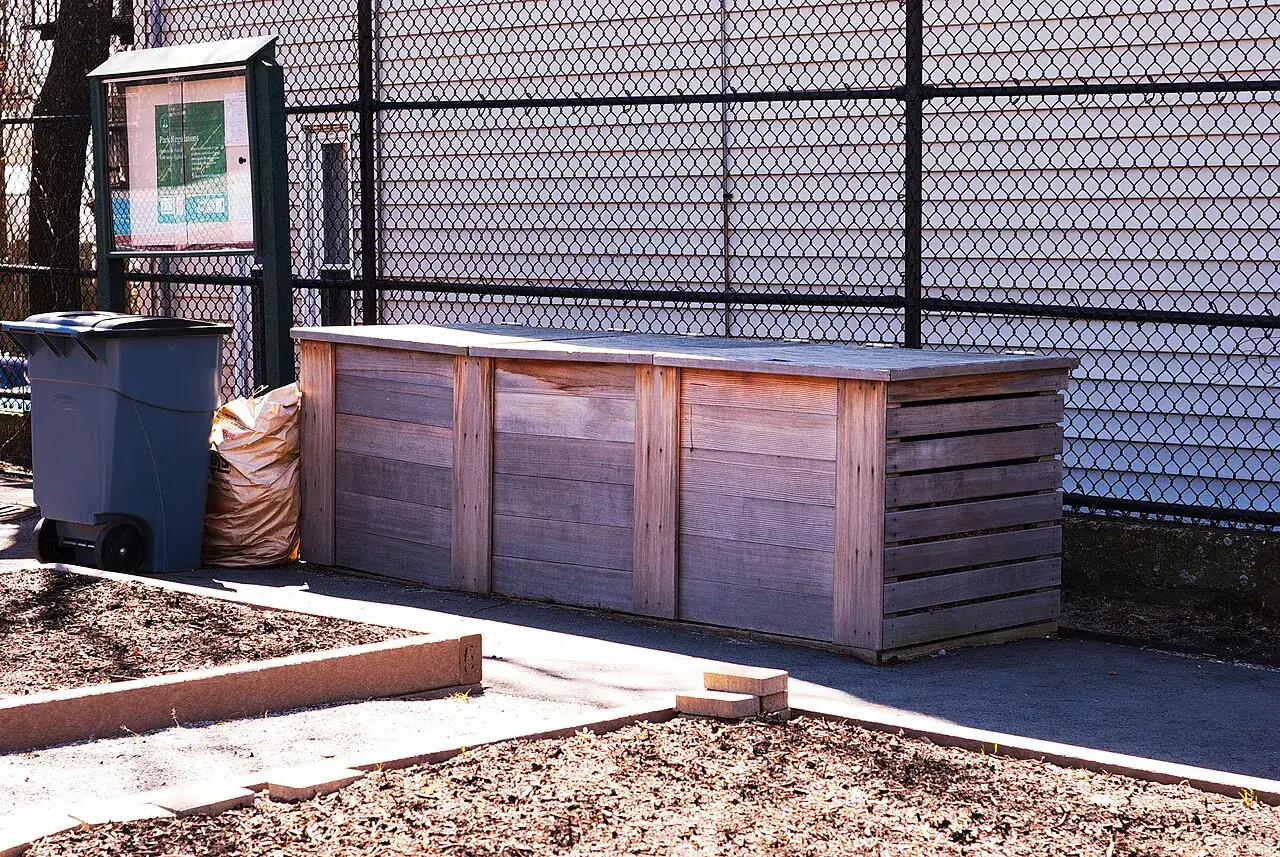
Home-made compost or leaf mould are usually the best options, the RHS says. Composted bark, soil improver and well-rotted manure can be bought. Our guide to making compost covers the home-made route.
Garden Organic looks at what each material is good for.
Garden compost. Feeds the soil, adds organic matter and improves soil life. It suggests 1 bucket per square metre. There is rarely enough of it to make a weed-proof layer, and a layer that thick would overfeed the soil.
Green waste compost (soil improver). The fine grade goes on food-growing plots at three buckets per square metre, at any time. The coarse grade can be spread about 7 cm deep around perennials and ornamentals to keep weeds out.
Bark. Mainly protects the soil and stops weeds. Spread it 7 cm thick around perennial ornamental shrubs. If it has not been composted, do not dig it in, because it locks up nitrogen as it breaks down.
Leaf mould. Low in nutrients, but good for soil structure, organic matter and soil life. Use well-rotted leaf mould in a layer 2–7 cm thick.
Cardboard. Its main job is to reduce weeds. Cut holes for the plants, or lay it under about 15 cm of growing medium on a no-dig bed. It cuts evaporation, but Garden Organic warns that it can also stop rain reaching the soil.
Gravel, slate and sheet mulches
Non-biodegradable mulches do not feed the soil or improve its structure, the RHS says. They do suppress weeds and save water, and some look good. The RHS lists slate, shingle, pebbles, gravel and stone chippings, sea shells and tumbled glass for containers, and sheet mulches or woven landscape fabric.
Colour matters. Dark material warms the soil in the sun. A light mulch such as white gravel reflects sunlight and keeps roots cooler.
Lay gravel thickly. If it is too thin, the RHS says, it mixes with the soil below and weeds get going on the surface.
Sheets. These suit new beds, where you plant through slits. Always choose a permeable sheet. A waterproof layer may cause runoff and drainage problems elsewhere. The RHS adds that it is best not to use materials made from plastic.
Carpet. Garden Organic advises against carpet as a ground cover. Modern carpets are treated with chemicals and dyes that can leach into the soil.
How thick should mulch be?
The RHS figure is at least 5 cm, and ideally 7.5 cm. For vegetable beds it says around 5 cm.
Garden Organic goes thicker for weeds. It says a layer should be at least 7.5 cm thick to control weeds well, and that research shows layers up to 15 cm reduce weeds further.
The two fit together. 5 cm is the minimum that does the job, and more is better if weeds are your main problem. The RHS makes the point that the type of organic material matters less than having a thick enough layer to block light, insulate the soil and cut evaporation.
Clearing weedy ground is a different job and needs far more. For no-dig beds on new or weedy ground, Garden Organic uses a light-excluding layer such as cardboard under mulch more than 15–20 cm thick, and waits at least six months before planting. Once the bed is running, about 5 cm of compost or manure a year keeps it going.
How much to buy
The RHS gives two rules of thumb.
- One cubic metre of organic matter mulches 15–20 square metres of ground. - Two bucketfuls, or one standard bag of around 70 litres, covers one square metre.
So a border 2 m by 5 m, which is 10 square metres, needs about ten bags, or roughly half to two-thirds of a cubic metre. For anything larger, the RHS says tonne bags or loose loads are often good value, and suggests sharing a delivery with a neighbour.
Do not use fresh potting compost as mulch, the RHS says. Spent compost from old pots can be reused if you have plenty.
How to mulch, step by step
The RHS method for a bed or border:
1. Weed. Remove perennial weeds. Low annual weeds can be left, as the mulch smothers them. Clear dead growth and tidy the border edges. 2. Barrow it in. Do not overfill the barrow or the buckets. Make more trips instead, and get help with heavy bags. 3. Tip small piles onto bare soil between the plants, starting at the back of the border and working forwards. 4. Spread with a narrow rake or a fork, at least 5 cm deep and ideally 7.5 cm. 5. Finish by hand under shrub branches and around emerging plants. Put an upturned pot over perennial crowns first, so they are not buried. 6. Keep stems clear. Leave a 10 cm mulch-free circle around woody stems.
The RHS says worms and other soil life work it in over time. The worms do that.
Feeding afterwards. Do not scrape the mulch back to feed. The RHS spreads fertiliser over the top in late winter and lets the rain wash it down. You may need to water under a mulch to reach the roots in a dry spell.
Around trees, shrubs and low plants
Trees and specimen shrubs. The RHS mulches single trees and shrubs out to the radius of the canopy.
Never pile it against the trunk. The RHS warns that mulch touching the stems of trees and shrubs can soften them and make them vulnerable to disease. Piled mulch stays damp and can rot the base. That is the reason for the 10 cm gap.
Low plants. Take care not to smother low-growing plants. Ground-covering Mediterranean plants such as thymes may be best left unmulched, the RHS says, because the mulch holds too much moisture around their stems and leaves.
Weeding later. Pull weeds by hand around permanent plants. The RHS advises against hoeing near their roots.
Mulching the vegetable plot
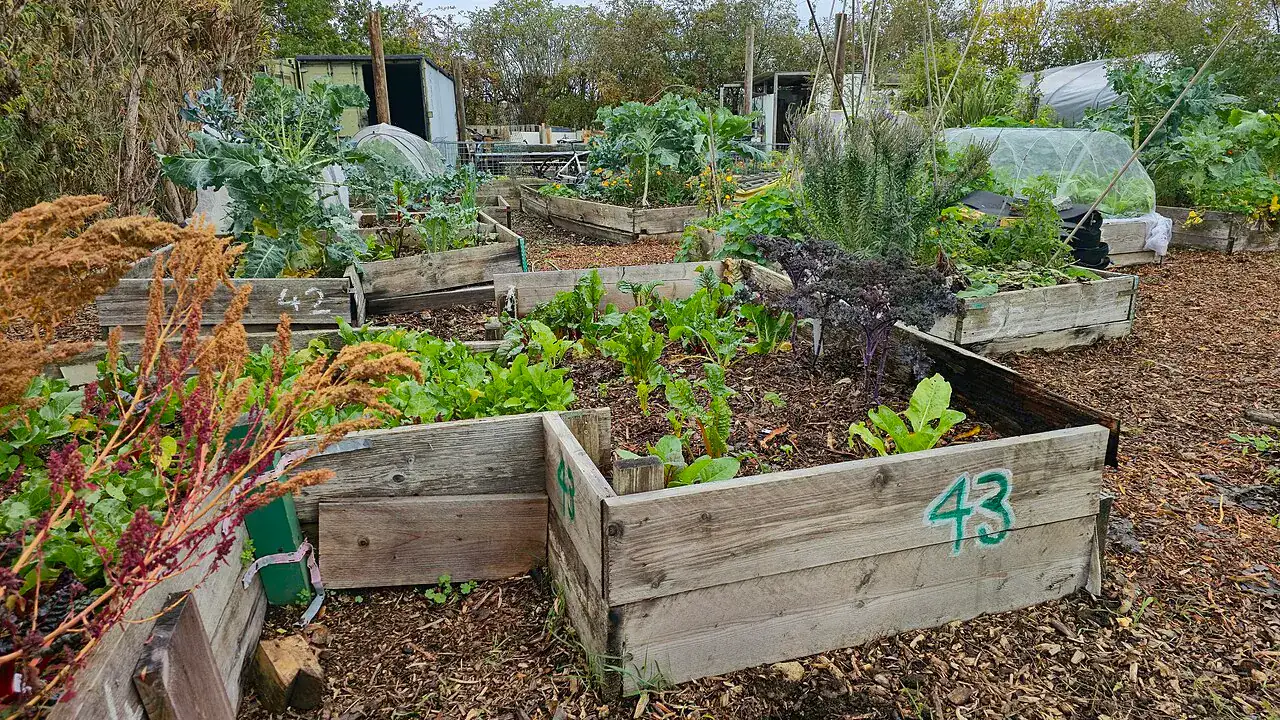

On vegetables the RHS uses mulch to keep weeds down, save soil moisture and protect roots from heat and cold. Most vegetable mulches are organic: compost, well-rotted manure and leaf mould, about 5 cm thick. The mulch must not touch the plants themselves.
Straw is on the RHS list specifically for strawberries.
Plastic: the RHS pages differ. Its beginner's page on mulching vegetables says black plastic suits marrows and can be used to grow potatoes without earthing up. Its main mulches page says it is best not to use any materials made from plastic. If you want a sheet mulch, cardboard is the alternative that Garden Organic uses.
Manure and mildew. One caution from the RHS disease pages: on gooseberries, it advises against mulching with manure, because soft growth is more easily attacked by mildew.
Problems and safety
Fresh wood chips and grass clippings. Freshly chipped prunings or grass clippings can use up nitrogen as they rot, the RHS says, leaving less for plants. Store freshly chipped material for a few weeks before using it.
Honey fungus. With wood chips there is a slight risk of introducing honey fungus, the RHS says. Poor-quality mulch can also bring in weeds, pests and diseases.
White threads in the mulch. These are usually the mycelium of harmless fungi that live on dead material. The RHS says it is nothing to worry about, and there is no need to dig it out.
Spent hops and dogs. The RHS warns that spent hops are poisonous if eaten by dogs. Do not use them where a dog has access.
Heavy loads. A cubic metre of compost is a lot of barrowing. The RHS advice is to keep each load light and make repeated trips.
How thick? What the sources say
| Use | Depth or rate |
|---|---|
| Beds and borders, any organic mulch | At least 5 cm, ideally 7.5 cm |
| Vegetable beds | Around 5 cm |
| For good weed control | At least 7.5 cm |
| Garden compost, to feed the soil | 1 bucket per square metre |
| Bark around ornamental shrubs | 7 cm |
| Well-rotted leaf mould | 2–7 cm |
| No-dig beds, yearly top-up | About 5 cm of compost or manure |
| Around woody stems | Leave a 10 cm mulch-free circle |
How to do it
- Pick a day when the soil is moist but not squelchy or frozen.
- Remove perennial weeds. Small annual weeds can stay, because the mulch will smother them.
- Clear away dead growth and tidy the edges of the border.
- Tip small piles of mulch onto the bare soil between plants. Start at the back of the border and work forwards.
- Rake it out at least 5 cm deep, ideally 7.5 cm.
- Spread it by hand under shrubs and around emerging plants, so that nothing gets buried.
- Leave a 10 cm circle clear around woody stems.
Common questions
When is the best time to mulch?
The sources differ. The RHS gives late autumn to late winter, November to February, and also mid- to late spring and autumn. Garden Organic prefers early spring, late February or early March, as the soil starts to warm.
How thick should mulch be?
At least 5 cm and ideally 7.5 cm, the RHS says. Garden Organic says at least 7.5 cm for good weed control.
Can I mulch in winter?
Yes, as long as the soil is moist, not waterlogged and not frozen. The RHS mulches page gives November to February. Garden Organic warns that mulch on cold ground can slow spring growth.
What is the best mulch?
Home-made compost or leaf mould are usually the best options, the RHS says. It adds that the type of organic material matters less than laying it thickly enough.
Should I remove weeds before mulching?
Remove perennial weeds. The RHS says low-growing annual weeds can be left, because the mulch will smother them.
Can I use fresh wood chips as mulch?
Store them for a few weeks first, the RHS says. Fresh chips can use up nitrogen in the soil as they rot. There is also a slight risk of bringing in honey fungus.
How much mulch do I need?
The RHS says one cubic metre covers 15–20 square metres, and two bucketfuls or one bag of about 70 litres covers one square metre.
Sources
We wrote this page using the sources below.
- Mulches and mulching, Royal Horticultural Society (RHS)
- How to mulch with organic matter, Royal Horticultural Society (RHS)
- Mulching vegetable gardens, Royal Horticultural Society (RHS)
- Best mulches for spring, Garden Organic, 2025
- The no-dig method, Garden Organic
- Gooseberry mildew, Royal Horticultural Society (RHS)