
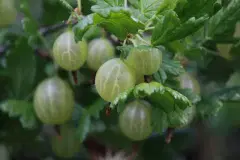
 Gooseberries Pruning
Pruning gooseberries
An unpruned gooseberry turns into a thorny tangle that is miserable to pick and prone to mildew. A few cuts each winter keep it open, healthy and heavy with fruit.
In short
Prune gooseberries every year in late winter or early spring, while they are dormant. Aim for an open, goblet-shaped bush with eight to ten main branches on a short stem. Remove dead wood and one to three old branches. In mid-June to July, shorten side-shoots to five leaves.
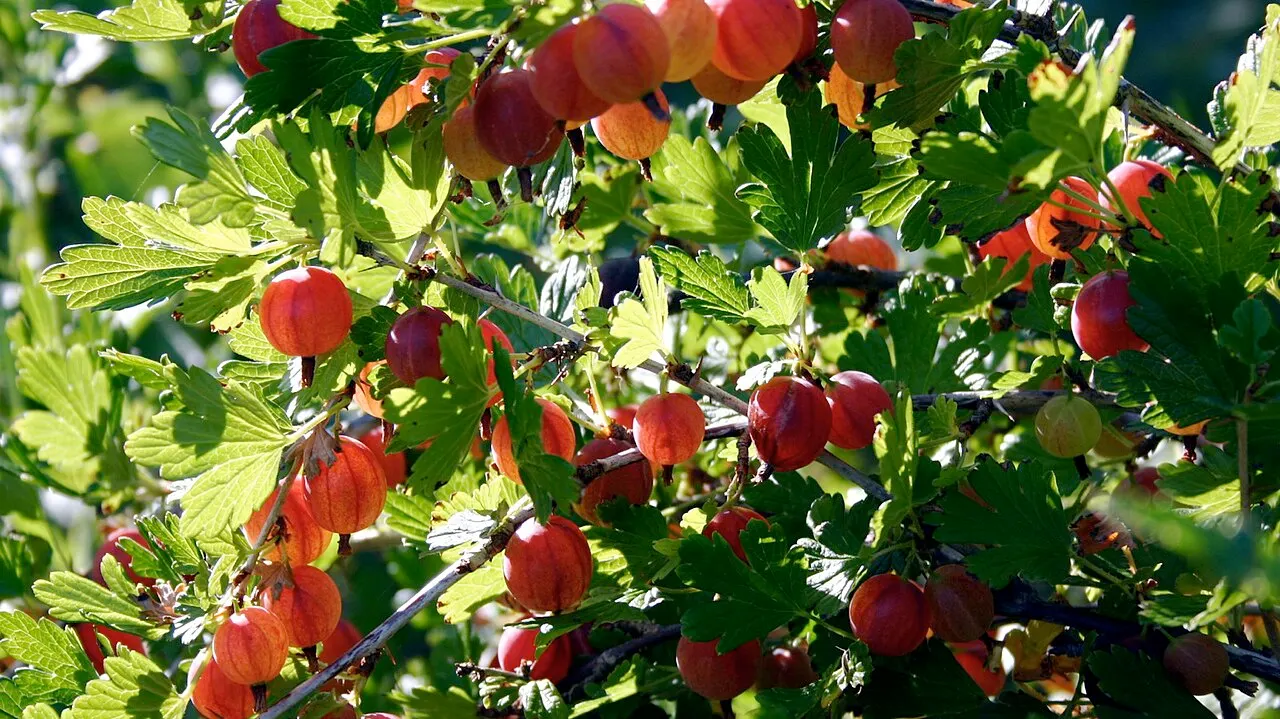

Gooseberries: what to do and when
Under cover and outdoors, for UK conditions. The weather differs from year to year and from north to south, so check your local conditions too.
When to prune gooseberries
Gooseberries are pruned twice a year, the RHS says: once in winter and once in summer.
Winter pruning is the main one. The RHS prunes all forms every year in late winter to early spring, while the plants are dormant and before any signs of growth appear. In an RHS feature on winter pruning soft fruit, chief horticulturist Guy Barter calls February the ideal time to prune currants and berries.
Summer pruning follows from mid-June to July. The RHS uses it on cordons and fans to restrict growth and keep their shape. Bushes can be summer pruned too.
The sources word the winter window a little differently. Garden Organic's gooseberry guide says winter or early spring. Its general fruit pruning page says most pruning is done in the dormant period from November to March, and adds that buds are easiest to judge in March, when they begin to swell. The RHS is narrower, with late winter to early spring. If you want one rule that fits them all, prune in February or early March, before growth starts.
None of these sources gives separate dates for the south of England and for Scotland. They tie the job to the state of the plant: prune while it is dormant, wherever you garden.
Why bother: light, air and easy picking
Left alone, a gooseberry becomes tangled and congested, the RHS says. That makes picking hard, and it encourages problems such as mildew.
The RHS aim is an open-centred, goblet-shaped bush with eight to ten main branches radiating from a short stem, called the leg. The open middle lets in light and air.
Garden Organic gives the same reasons for pruning any fruit: it opens up the canopy, lets air circulate, helps prevent disease and encourages more fruit.
A well kept plant pays you back for years. The RHS says established gooseberries crop every summer for at least 10–15 years. A bush is 1–1.5 m tall and wide.
Tools and how to make the cut
Gooseberries are prickly, so the RHS wears thorn-proof gloves for pruning.
Garden Organic uses sharp secateurs, to leave a clean cut with no rough edges. It cuts at a slant, just above a bud that points outward or upward.
The RHS is specific about which bud. Cut above an outward-facing bud. On a branch that grows at a wide angle, close to horizontal, choose an upward-facing bud instead.
If you are nervous, Garden Organic has a kind word: fruit bushes are normally very resilient and recover even from harsh cuts.
Pruning a new bush: the first two years
The RHS suggests buying a one- or two-year-old plant with a short stem of about 10–15 cm and three or more side-shoots.
Year 1, after planting. Choose up to five well-spaced, strong shoots. Cut each back by a half to three-quarters. Remove all the other shoots, and any growing from the short stem.
Year 2, late winter. Choose at least eight strong, outward-growing shoots to become the main branches. Shorten them by up to a quarter. Remove strong surplus shoots and badly placed ones, such as those that cross or grow inwards. Cut the remaining shoots back to three or four buds. Keep the short stem clear. The aim is eight to ten main branches in total.
The sources differ on how hard to cut in year 2. Garden Organic says to reduce the length of the main stems by half in the second year, and after that to shorten the longer side-shoots. The RHS shortens the main branches by up to a quarter. Both lead to a branched framework. The Garden Organic cut is the harder of the two.
For planting dates and spacing, see when to plant gooseberries.
Pruning an established bush in winter
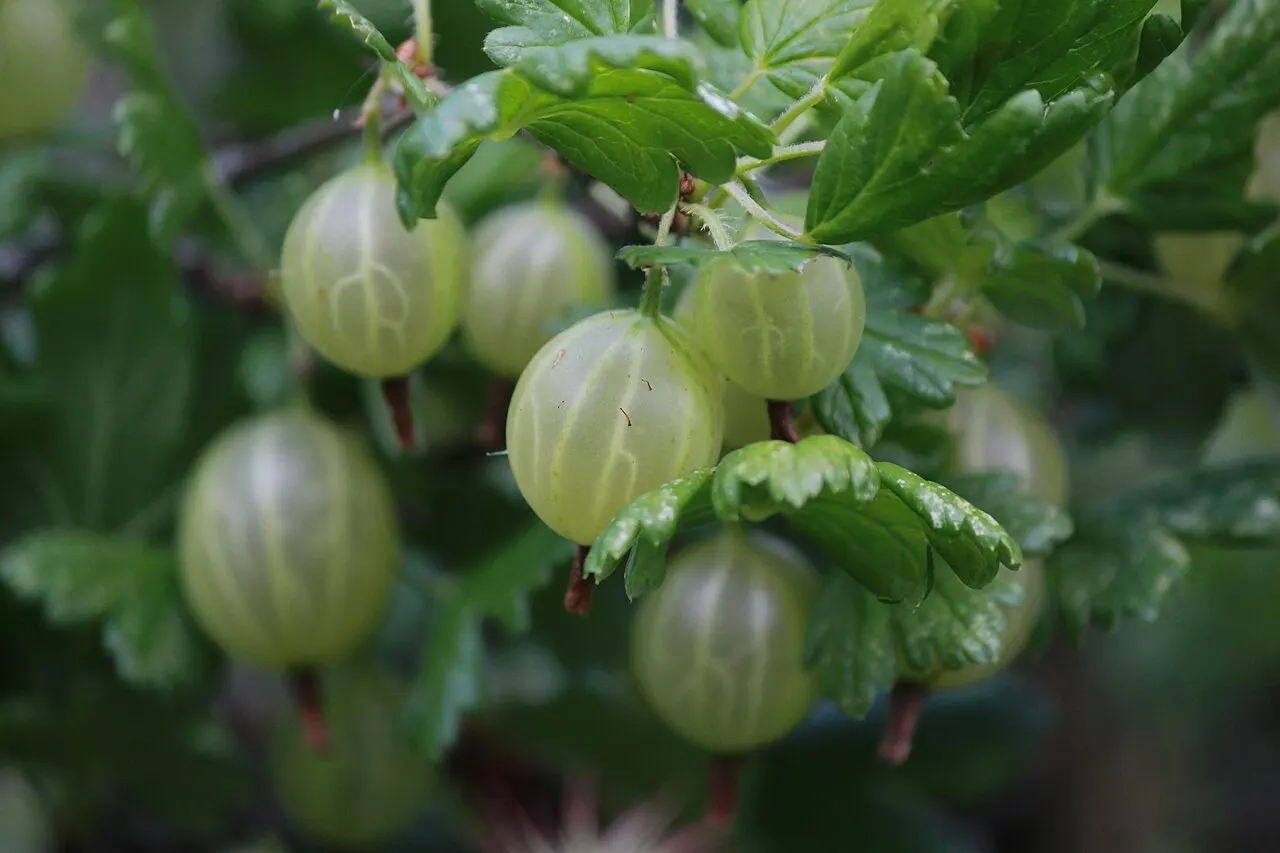

The RHS describes two methods for a mature bush. You can use either, or combine them.
Branch renewal. This keeps the bush young.
1. Remove dead or damaged shoots. 2. Every year or every other year, remove one to three older, less productive branches. You can also cut them back to a strong side-shoot that will take over. Keep the centre open. 3. Remove shoots growing from the main stem. 4. Remove low branches that will touch the ground when heavy with fruit, or cut them back to an upward-facing bud or side-shoot. 5. On vigorous varieties, reduce the previous season's excess growth by a quarter to a half.
Spur pruning. This builds short fruiting spurs along the branches.
1. Cut last year's growth on the main branches back to three or four buds. 2. Cut last year's growth on the side-shoots back to two buds. 3. Keep the short main stem clear.
Low branches matter more than they seem. The RHS notes that berries on or near the soil get splashed with mud or eaten by rodents.
Summer pruning
From mid-June to July, the RHS shortens the current season's side-shoots, cutting back to five leaves. Leave alone any shoot you want as a replacement for an old, less fruitful branch.
On a bush this is a form of spur pruning that you can add to the winter work. On cordons and fans it is the cut that restricts growth and keeps the shape.
June is also when the first fruit is picked. The RHS picks every other fruit in June, while green, for jam, pies, tarts and sauces. The rest swell and ripen for picking in July and August. Garden Organic thins alternate fruits when they are 1 cm long.
Cordons
A cordon is a gooseberry kept to one main stem, upright or at 45 degrees, with short fruiting spurs along it. The RHS says tall, slender cordons take up very little ground. They are spaced 30–38 cm apart, with the wider spacing on good soil. Each stem is tied to a 1.7 m bamboo cane, fixed to horizontal wires 40–60 cm apart.
The RHS prunes gooseberry cordons in the same way as redcurrant cordons. Its redcurrant guide gives the detail.
Winter after planting. Shorten the previous season's growth on the leading shoot by a quarter to a half. Cut all other shoots back to one bud. Keep the lowest 15–20 cm of the stem free of shoots.
Each summer. Tie in the leading shoot as it grows. When side-shoots have made seven or eight leaves, cut them back to five leaves. Pinch any regrowth back to one leaf.
Each winter after that. Shorten the new growth on the main stem by a quarter, or by half if growth is weak. Cut the summer-pruned side-shoots back to one or two buds. Once the cordon reaches the height you want, cut the leader's new growth back to one bud each winter. On an old cordon, thin crowded spurs by removing some of the older sections.
Turning a bush into a cordon. The RHS gooseberry guide picks one strong, upright shoot and prunes the rest back to 2.5 cm.
Standards and fans
Standards. A standard gooseberry looks like a lollipop, the RHS says, with a bushy head on a tall bare trunk, typically 1–1.2 m when bought. Prune the head exactly as you would a bush, to an open goblet shape, and do it regularly so the head does not grow too large or crowded. A standard needs a strong, permanent stake. Remove any shoots from the base, or from the stem below the graft, straight away. They are not the variety you bought.
Fans. A fan is trained flat against a wall or fence. To start one from a one-year-old plant, the RHS cuts the main stem down to 15–20 cm from the ground after planting. To convert a bush, it chooses two to four well-placed shoots, trains them flat against the support, cuts them back by half and removes the rest. Fans are summer pruned in mid-summer to keep their shape.
Pruning against mildew
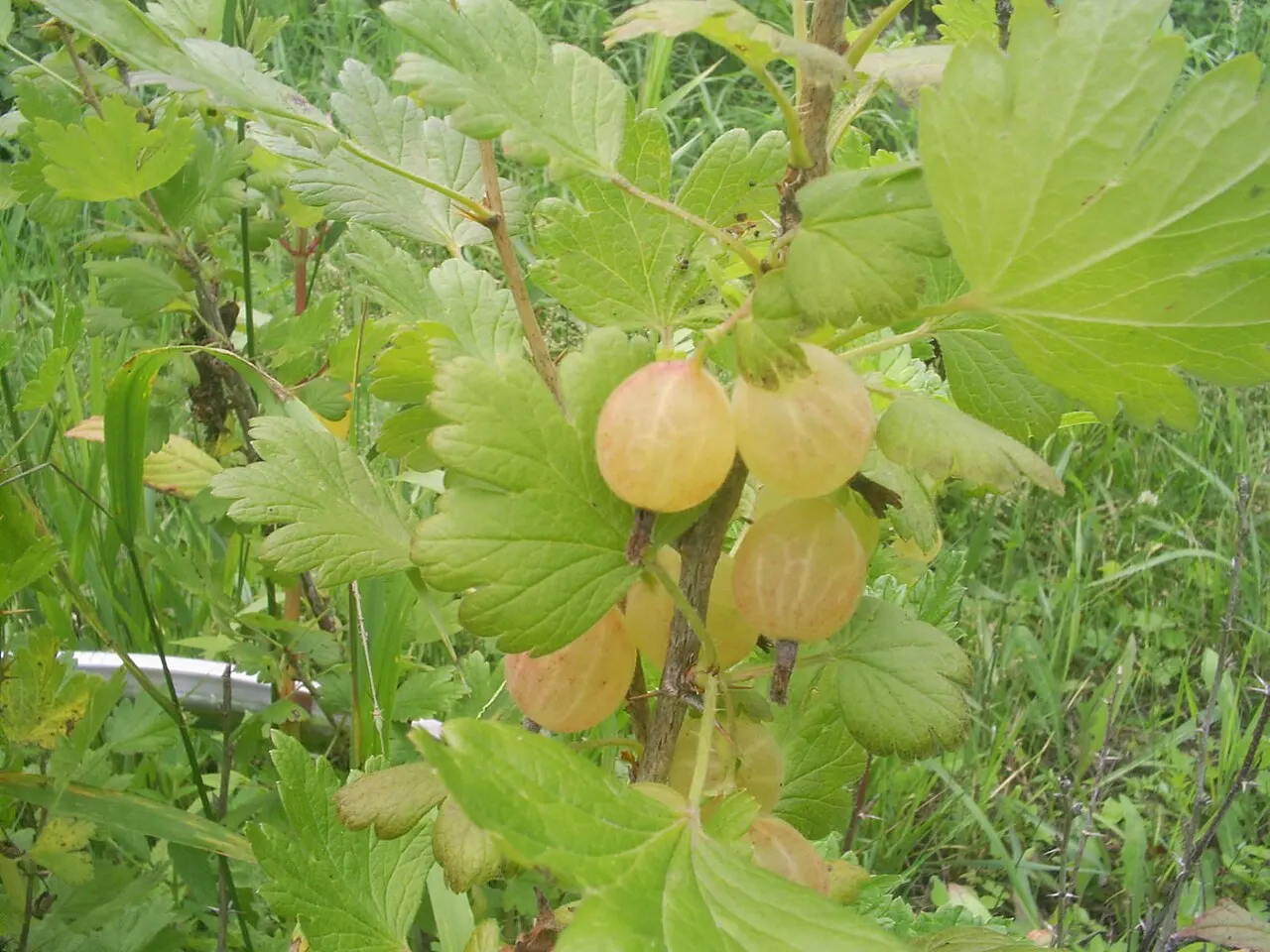

The RHS calls gooseberry mildew the most serious disease of gooseberries. It shows from early summer as powdery, grey-white patches on leaves and fruit that later turn brown. Young shoots are stunted and twisted at the tips, and die back.
Pruning is part of the answer. The RHS says an open form reduces the still air between branches that the disease likes. It also tip prunes affected shoots as soon as they are seen, and disposes of the cut ends. Clear up all the fallen leaves in autumn.
Feeding matters too. Too much nitrogen-rich fertiliser, and mulching with manure, give soft growth that mildew attacks more easily, the RHS says.
The RHS recommends that you do not use fungicides for this disease. If you do decide to spray, use only products approved for home garden use in the UK, and follow the label.
Variety choice helps. The RHS rates several gooseberries as resistant, among them 'Greenfinch', 'Hinnomaki Red' and 'Martlet'.
What a pruned plant gives back
The RHS gives figures for a plant in good shape. An established bush yields 2.5–5.5 kg of fruit a year. A cordon yields about 1 kg.
Fruit ripens from late June to early August, depending on the variety. Garden Organic picks berries when they are fully coloured and leaves a short stalk on each one, because the skin can tear otherwise.
If the thorns put you off, an RHS feature mentions the nearly thornless 'Captivator'. Its author is honest about the trade-off: in his garden it seems to have lost some of its spark along with its thorns, and the plants crop lightly.
Pruning gooseberries at a glance
| What | What to do |
|---|---|
| When, winter | Late winter to early spring, while dormant |
| New bush, year 1 | Keep up to five strong shoots and cut them back by a half to three-quarters |
| New bush, year 2 | Keep at least eight outward-growing shoots, shorten by up to a quarter, cut the rest to three or four buds |
| Established bush, renewal | Remove one to three older branches every year or every other year |
| Established bush, spurs | Main branch growth to three or four buds, side-shoots to two buds |
| Vigorous varieties | Reduce last season's excess growth by a quarter to a half |
| Summer, mid-June to July | Shorten this year's side-shoots to five leaves |
| Cordon, side-shoots | To five leaves in summer, then to one or two buds in winter |
| Main stem (leg) | Keep it clear of shoots |
How to do it
- Wait for late winter or early spring, before the buds start to grow. Put on thorn-proof gloves.
- Cut out dead and damaged shoots first.
- Remove one to three of the oldest, least productive branches, or cut them back to a strong young side-shoot.
- Take out shoots that crowd the centre, and low branches that will touch the ground when heavy with fruit.
- Shorten last year's growth on the main branches to three or four buds, and side-shoots to two buds.
- Clear any shoots from the short main stem.
- From mid-June to July, shorten this year's side-shoots to five leaves.
Common questions
When should I prune gooseberries?
In late winter to early spring, while the plant is dormant and before growth starts, the RHS says. An RHS feature calls February ideal. Shorten side-shoots again from mid-June to July.
Can I prune gooseberries in autumn?
The RHS gives late winter to early spring. Garden Organic's general fruit page says most pruning is done in the dormant period from November to March, so an early cut on a dormant bush is within its window.
How hard can I cut back a gooseberry bush?
On an established bush the RHS removes one to three older branches every year or every other year, and shortens last year's growth on main branches to three or four buds.
How do I prune an overgrown gooseberry?
Start with dead and damaged shoots, then take out one to three of the oldest branches, the RHS says. Open the centre, clear the main stem and remove low branches that touch the ground.
Do gooseberries need summer pruning?
The RHS summer prunes cordons and fans to restrict growth and keep their shape, and says bushes can be spur pruned in summer too. From mid-June to July the RHS cuts the current season's side-shoots back to five leaves.
Does pruning help with gooseberry mildew?
Yes. The RHS says pruning to an open form reduces the still air the disease favours. It also tip prunes affected shoots as soon as they are seen.
Sources
We wrote this page using the sources below.
- Gooseberries: pruning and training, Royal Horticultural Society (RHS)
- How to grow gooseberries, Royal Horticultural Society (RHS)
- Pruning redcurrants and whitecurrants, Royal Horticultural Society (RHS)
- Winter pruning soft fruit, Royal Horticultural Society (RHS)
- Gooseberry mildew, Royal Horticultural Society (RHS)
- Gooseberry (growing guide), Garden Organic
- How to prune fruit, Garden Organic